
Automatic Litter Box Features Explained: Sensors, Rakes, Rotating Systems, and More

Automatic litter boxes can look complicated at first. Between sensors, cleaning mechanisms, waste drawers, timers, and smart features, it can be difficult to understand what each part actually does.
The good news is that most automatic litter boxes rely on a few core technologies. Understanding these features can help you compare different designs and choose a system that fits your cat and your routine.
How Automatic Litter Boxes Work
At a basic level, an automatic litter box has three jobs:
-
Detect when your cat has used the box.
-
Separate waste from clean litter.
-
Move the waste into a designated container.
Different models accomplish these tasks in different ways. The biggest difference is usually the cleaning mechanism: some use a rake, while others use a rotating drum or chamber.
1. Sensors: How the Box Knows When Your Cat Is Inside
Sensors are one of the most important components of an automatic litter box. They help determine when a cat has entered or exited the box and when it is safe to begin a cleaning cycle.
Depending on the design, a litter box may use weight sensors, motion sensors, infrared sensors, or other detection technology.
A good sensor system can help prevent the cleaning mechanism from activating while your cat is still inside. Some smart litter boxes may also use sensors to monitor activity or provide information through an app.
Because sensors are often located near the litter chamber, keeping dust and litter buildup under control can help support consistent operation.
2. Raking Systems: A Comb That Moves Across the Litter
Raking automatic litter boxes use a motorized rake or comb to move through the litter after a cat leaves.
The rake collects waste clumps and moves them toward a waste compartment while leaving usable litter behind.
This design is relatively straightforward, but the litter itself plays an important role. Strong, intact clumps are easier for a rake to collect without breaking apart or leaving small pieces behind.
For automatic boxes that use a rake, consider a litter such as [BoxiePro® Bot™ Clumping Clay Cat Litter] that is specifically designed for self-cleaning systems.
3. Rotating Systems: Separating Waste by Movement
Rotating automatic litter boxes use a different approach. Instead of dragging a rake through the litter, the litter chamber or drum rotates.
As the chamber moves, clean litter is separated from waste and returned to the usable portion of the box. Waste is directed into a separate compartment.
Rotating designs can vary considerably. Some use a rotating drum, while others use a rotating chamber or similar mechanism.
The key consideration is how well the system separates waste without allowing wet litter to smear against internal surfaces.
4. Waste Drawers: Where the Waste Goes
After an automatic litter box separates waste, it needs somewhere to put it.
Most systems use a removable waste drawer or container underneath or beside the litter chamber. Some containers are designed to hold disposable liners, while others can be emptied directly.
A larger waste compartment may mean fewer trips to empty the box, particularly in a multi-cat household. However, capacity varies significantly between models.
Remember that an automatic litter box still needs regular maintenance. The machine may handle the scooping, but someone still needs to empty the waste compartment and keep the unit clean.
5. Timers and Cleaning Delays
Many automatic litter boxes allow the cleaning cycle to begin after a short delay.
This gives your cat time to leave the box before the machine starts operating. Some models allow owners to adjust the delay, while others use a preset cycle.
A delayed cleaning cycle can also give urine clumps time to form before they are removed. That can be especially important when using clumping litter.
6. Anti-Jam and Safety Features
Automatic litter boxes contain moving parts, so many models include features designed to stop or interrupt the cleaning cycle if something isn't moving as expected.
These may include motor monitoring, obstruction detection, automatic shutoffs, or other safety mechanisms.
The exact technology varies by manufacturer, so it's worth looking at the specific safety features of a model rather than assuming every automatic litter box works the same way.
7. App Connectivity and Activity Tracking
Some newer automatic litter boxes connect to a smartphone app.
Depending on the model, an app may let you:
-
Start or pause cleaning cycles
-
Adjust settings
-
Receive maintenance notifications
-
Monitor litter box activity
-
Track how frequently the box is used
Activity tracking can be useful for noticing changes in your cat's routine, although an automatic litter box should not replace paying attention to your cat's normal behavior.
For more information, see our guide to [How to Read Your Cat's Litter Box Habits].
8. Automatic Refilling and Other Convenience Features
Some automatic litter boxes go beyond waste removal. Depending on the model, additional features can include automatic litter refilling, sealed waste storage, odor-control systems, or replaceable filters.
These features can reduce the amount of hands-on maintenance required, but they also introduce additional components that may need cleaning, replacement, or occasional troubleshooting.
More features don't necessarily mean a better fit for every household. Consider which functions will actually make your litter routine easier.
Why the Type of Cat Litter Still Matters
An automatic litter box can only work as well as the litter inside it.
Raking and rotating systems both need to separate soiled litter from clean litter efficiently. Litter that forms firm, durable clumps can make that process easier, while excessive dust, weak clumping, or sticky residue can create additional maintenance.
BoxiePro® Bot™ Clumping Clay Cat Litter is specifically formulated for automatic litter boxes, with strong clumping and low-dust performance designed to support self-cleaning systems.
If you're comparing litter options, check out Boxie’s blog on Best Clumping Litter for Raking vs. Rotating Automatic Litter Boxes.
Which Automatic Litter Box Features Matter Most?
There isn't one feature that determines whether an automatic litter box will work well for every cat.
Instead, consider the complete system:
-
Sensors: Help detect when your cat is using the box and when a cleaning cycle can begin.
-
Rakes: Physically collect waste clumps from the litter bed.
-
Rotating systems: Use movement to separate waste from clean litter.
-
Waste drawers: Store waste until it can be emptied.
-
Timers: Control when cleaning begins after use.
-
Safety features: Help stop the machine when an obstruction or unexpected condition is detected.
-
Smart features: Can provide settings, notifications, and activity information.
-
Litter compatibility: Helps determine how consistently the cleaning mechanism can separate waste.
Understanding these features makes it easier to look past flashy specifications and focus on how an automatic litter box will actually fit into your home.
FAQs
How does an automatic litter box know when to clean?
Automatic litter boxes use sensors to detect when a cat enters and leaves the box. After the cat exits, the system typically waits for a preset or adjustable delay before starting a cleaning cycle.
What is the difference between raking and rotating automatic litter boxes?
Raking systems use a motorized rake or comb to collect clumps and move them into a waste compartment. Rotating systems move the litter chamber or drum to separate clean litter from waste, which is then directed into a waste drawer.
Do automatic litter boxes need special cat litter?
Litter compatibility depends on the specific automatic litter box, so always check the manufacturer’s recommendations. For systems that use clumping litter, firm, durable clumps and low-dust performance can help the machine separate waste cleanly and reduce residue or buildup.
For more guidance, read Are Automatic Litter Boxes Worth It? Pros, Cons, and What to Consider and Automatic Litter Box FAQs: Answers to the Most Common Questions.

Mentioned in this story
Now, about the litter.
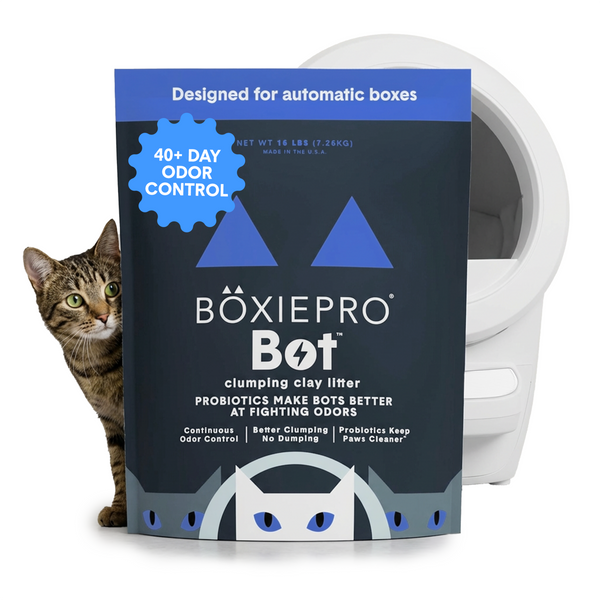
BoxiePro® Bot™ Clumping Clay Cat Litter
$ 34.99


